Hardware Engineer | RTL, Embedded Systems & Circuit Design

UC Irvine EE student (Semiconductors & Optoelectronics) building FPGA cores, embedded firmware, and PCBs. Currently interning in hardware validation at Revvo AI.

About

Hi! I'm Pranav, a second-year Electrical Engineering student at UC Irvine specializing in Semiconductors & Optoelectronics. I work as a Hardware Validation Intern at Revvo AI and as a Hardware/Software R&D Engineer at UCI's HERO Lab, where I split my time between analog circuit design and embedded firmware. Outside of that, I like building things from scratch to understand them better, from RISC-V processors in Verilog to custom PCBs and embedded sensor projects.

Portrait of Pranav Prasanna Rao

Skills

Hardware

  • Verilog/RTLAdvanced
  • RISC-VAdvanced
  • Circuit AnalysisAdvanced
  • SolderingAdvanced
  • VivadoIntermediate
  • OscilloscopeIntermediate
  • FPGAIntermediate
  • Schematic CaptureIntermediate
  • I2C / UART / SPIIntermediate
  • LTSpiceIntermediate

Software

  • PythonAdvanced
  • CAdvanced
  • C++Intermediate
  • GitAdvanced
  • KiCadIntermediate
  • AltiumIntermediate
  • SystemVerilogIntermediate
  • AssemblyIntermediate
  • MATLABIntermediate
  • LinuxIntermediate
  • GDBBeginner
  • Tcl / MakeBeginner

AI/ML

  • PyTorchIntermediate
  • ONNXIntermediate
  • NumPyIntermediate
  • OpenCVIntermediate
  • MediaPipeIntermediate
  • PhysNet / DeepPhysIntermediate
  • LangGraphBeginner

Experience

Hardware Validation Intern Revvo AI

San Mateo, CA | June 2026 – Present

  • Reviewed schematics and PCB designs for a battery-powered wireless sensor node, catching pre-fabrication issues before they became field failures
  • Built an automated test framework in Python interfacing with an oscilloscope, JLink, and programmable power supply, cutting manual bench-characterization time significantly
  • Validated hundreds of wireless tire-health sensor units daily across RF, threshold, and firmware checks to certify units for field deployment

Hardware/Software R&D Engineer HERO Lab, UC Irvine

Irvine, CA | March 2026 – Present

  • Designed the analog front-end for a grant-funded contactless heart-sound sensing system, building a multi-channel MEMS microphone array for capturing weak cardiac signals
  • Built a sensor-fusion algorithm that weights each microphone by SNR and distance to reconstruct clean heart-rate signals, prototyped in Python and ported to embedded firmware
  • Optimized deep learning models like PhysNet and DeepPhys for edge deployment through ONNX quantization, balancing model size, latency, and compute efficiency

Embedded Systems Developer Open Project Space

Irvine, CA | September 2025 – May 2026

  • Built an ultrasonic proximity-triggered trash can with sub-100ms response time using interrupt-driven distance sensing in Embedded C
  • Designed servo actuation sequences driven by real-time ultrasonic readings, calibrating PWM control for repeatable mechanical motion
  • Soldered and built 7+ embedded hardware projects, debugging GPIO and UART interfaces for stable, fault-free operation

Portfolio

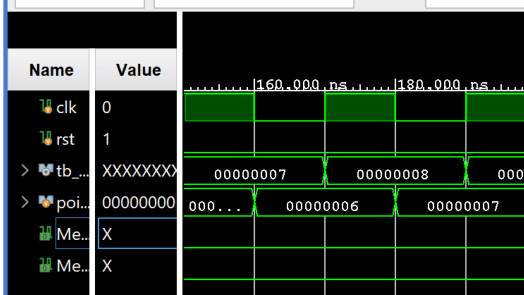
Vivado simulation waveform showing clock, reset, and register values across processor cycles

Single-Cycle RV32I Processor

Designed and verified a 9-module single-cycle RISC-V (RV32I) processor in Verilog, supporting R-type, I-type, load, and store instructions. Built a custom 32-bit ALU, synchronous register file, and full datapath, verified through a self-written Vivado testbench with cycle-accurate waveform analysis. Currently being extended into a pipelined, hazard-resolved core with SystemVerilog verification.

  • Verilog
  • RISC-V
  • RTL Design
  • Vivado
  • Computer Architecture
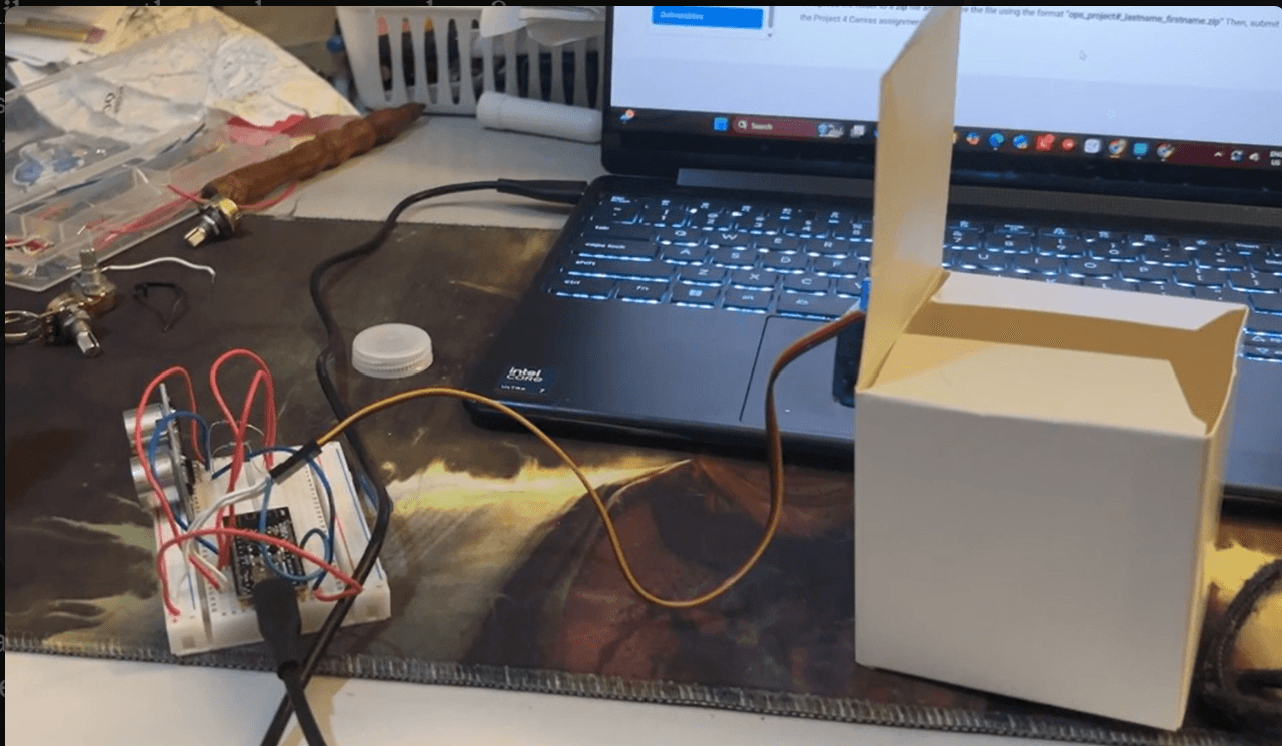
Prototype build with the trash can lid open, driven by a breadboarded ultrasonic sensor and servo

Ultrasonic Proximity-Triggered Trash Can

Built a touchless trash can using an HC-SR04 ultrasonic sensor with interrupt-driven echo timing, achieving sub-100ms lid response across a calibrated 0–30cm range. Designed servo actuation logic in Embedded C with a non-blocking auto-close timer, tested across 50+ repeatable cycles.

  • Embedded C
  • ESP32
  • Interrupt-Driven
  • Sensors
  • PWM
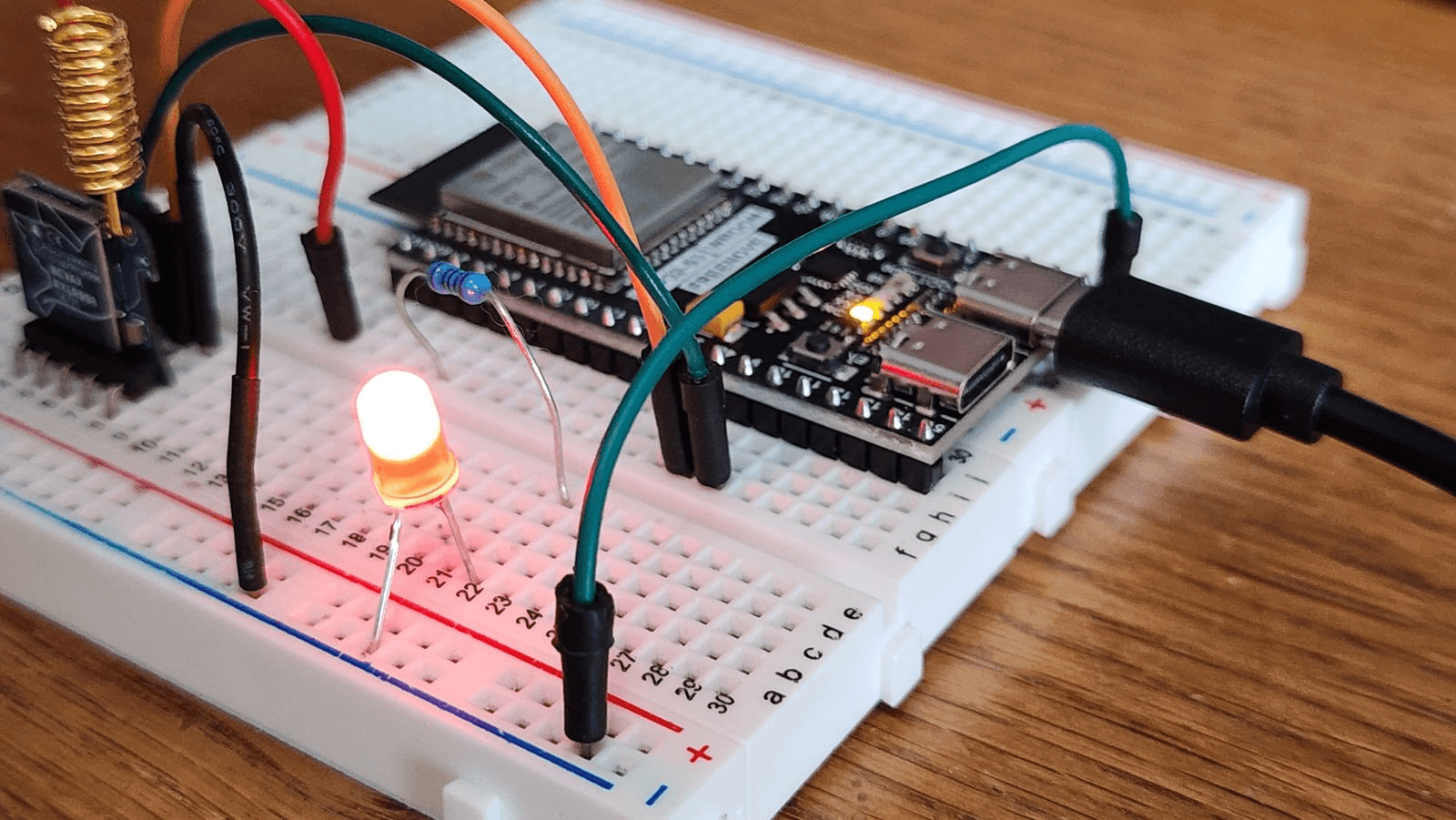
Glowing LED and resistor on a breadboard wired to an ESP32 development board

illustrative

Optical Material Classifier (ClimaCorre)

Designed a mixed-signal circuit using an RGB LED and photodiode sensing to differentiate plastic types (HDPE vs. PET) by wavelength-dependent reflectance, across 2+ functional prototypes. Built the analog capture chain feeding an ESP32 for real-time signal processing, emitting an optical signature for classification.

  • Mixed-Signal Circuit
  • ESP32
  • Photodiode Sensing
  • Optical Sensing
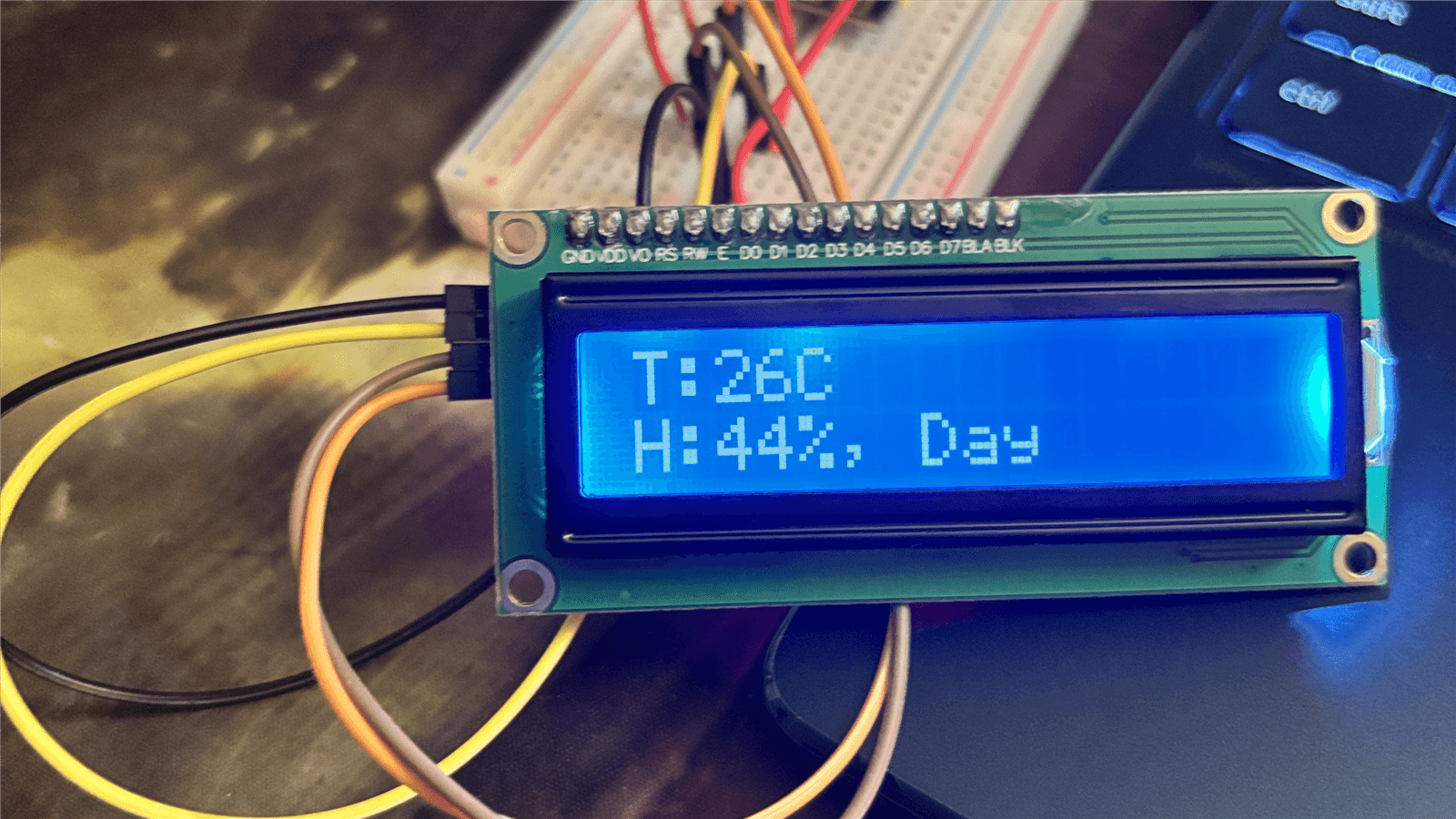
16x2 LCD display node showing live temperature and humidity readings from the sensor node

WiFi Weather Station

Built a two-node ESP32-C3 weather monitor: a sensor node reads temperature, humidity (AHT20, ±0.2°C/±2% RH), and ambient light, then transmits live readings over WiFi to a separate display node running a 16x2 I2C LCD, refreshing every 10 seconds for a stable readout.

  • ESP32
  • WiFi
  • IoT
  • I2C
  • Sensors
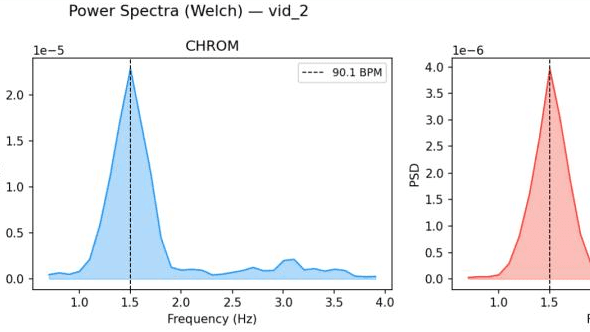
Welch power spectral density plot with the detected heart-rate peak marked at 90.1 BPM

Real-Time rPPG Vitals Pipeline

Built a real-time rPPG (remote photoplethysmography) pipeline in Python using MediaPipe facial landmark detection and Fourier-based signal processing to extract heart rate from video, validated against 100+ patients from the UBFC dataset. Trained and benchmarked PhysNet and DeepPhys models in PyTorch for vitals emulation.

  • Python
  • PyTorch
  • Signal Processing
  • Computer Vision
  • MediaPipe
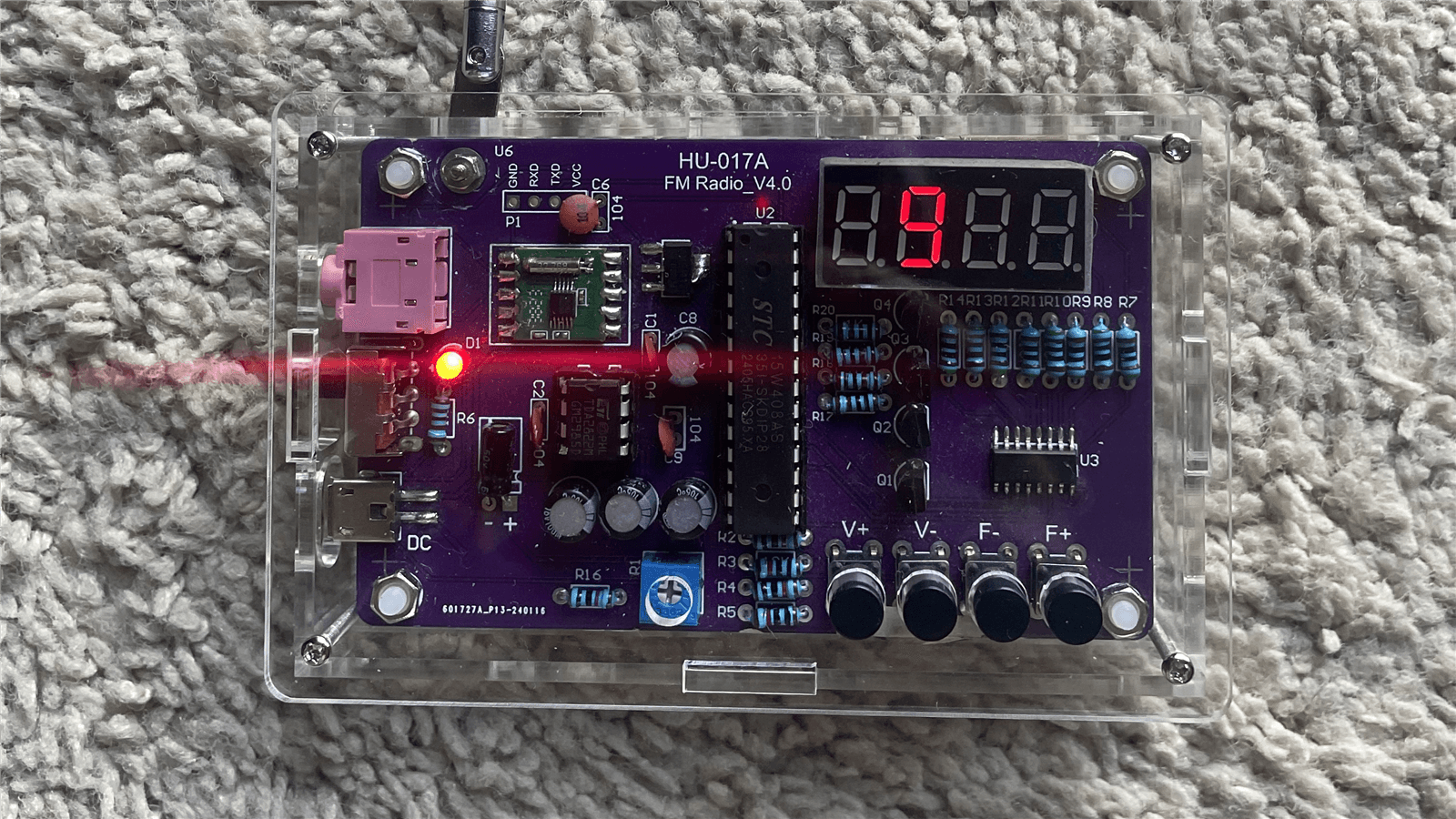
Finished FM/AM radio in a clear acrylic case with a lit seven-segment frequency display and four-button interface

Hand-Soldered FM/AM Radio

Hand-soldered a fully functional FM/AM radio from 20+ discrete components and ICs around an RDA5807 tuner, covering the full FM (87.5–108 MHz) and AM (530–1700 kHz) broadcast bands with a 4-button volume and tuning interface. Built end-to-end from multi-page schematics — component selection through board bring-up — debugging reception failures down to cold joints and grounding faults with a multimeter.

  • Analog Circuits
  • RF
  • Soldering
  • RDA5807
  • Schematic Reading